VETER ROBOTICS
RU|EN
+7 910 048-27-03

AI in the field: how Smotritel tells crop from weed

AI in the field: how Smotritel tells crop from weed

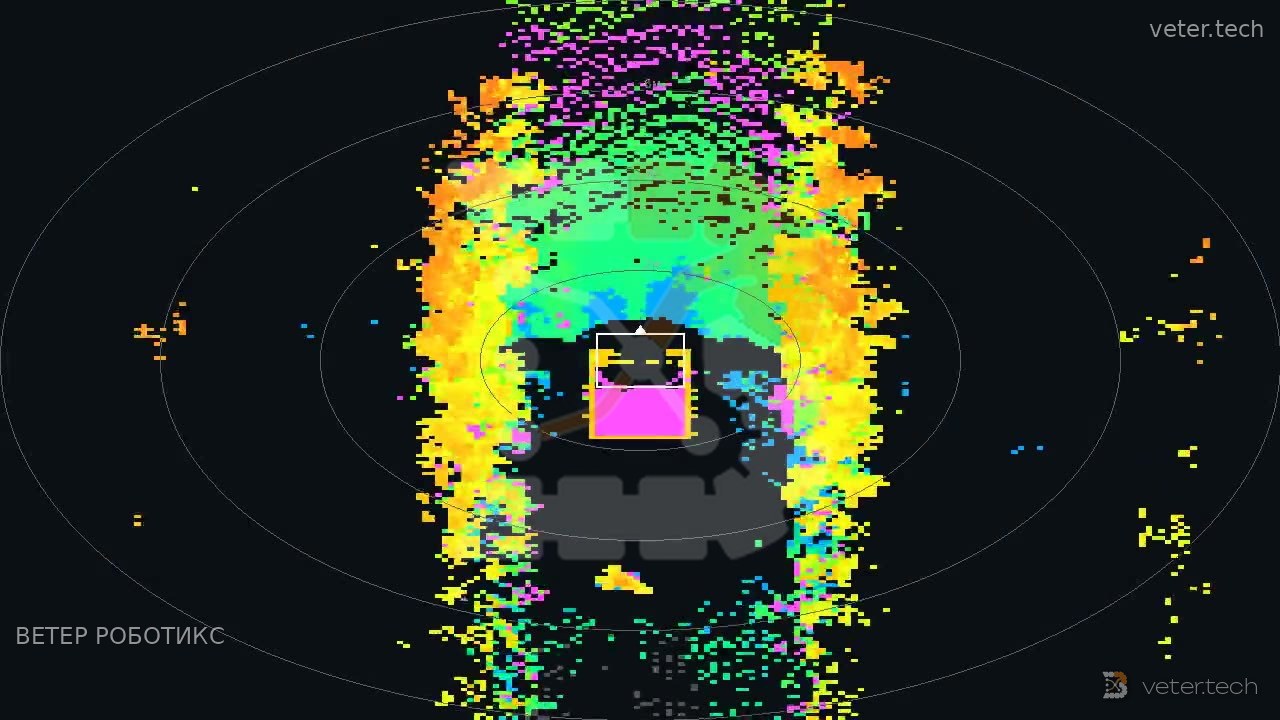
We are working on a product to help farmers. Smotritel (Russian for "caretaker") is computer vision for our tracked robotic platform: it analyzes footage from the camera of a robot driving down a row and separates crop from weed.

Right now the neural network tells three things apart: currants, raspberries and weeds. On video this shows up as glowing, labeled regions and a table of each one's share of the frame.

We train the system on our own recordings. The training segments are labeled by someone who knows this field, reviewing the runs and marking, frame by frame, what to use. AI in agriculture starts with labeling, and the quality of the labels decides everything.

Measurements from a currant row, the August 20 run, 351 frames: currants take up 26% of the frame, weeds 50%. Averaged over the segment, crop is 30% and weeds 47%. In the open space between rows, crop is 1.6% and weeds 75.7% - where there is no bush, the model doesn't find one.

Why a farmer needs this. A robot that can tell a bush from a weed can work selectively: it treats the space between the rows and leaves the crop alone. The same vision will serve our other applications too - robotic land clearing and roadside maintenance - where overgrowth has to be told apart from plantings in exactly the same way.

Limitations. These are first steps. For now the analysis runs on recordings on a test bench; putting an autonomous platform with this vision into the field comes next. In frames with little crop in them, the model sometimes labels as raspberry something that isn't: 4% of windows in one of the segments. Raspberries have so far been labeled from a single run, and that is the model's main weakness with them. The work continues.

Find us on MAX and Telegram: development and field trials, as they happen (in Russian).

NEWS

More news

What a ground robot's navigation sees when its localization goes off track

What a ground robot's navigation sees when its localization goes off track

Experience, the son of hard mistakes A robot moves through an orchard slower than a person walks, and its navigation suddenly reports that it's racing along at 180 km/h. That's how the onboard DLIO localization system behaved on the VETER TEGU. A localization system calculates the machine's position from sensor data. DLIO works as a satellite-free onboard navigation system: the lidar scans the surroundings with a laser, a motion sensor picks up turns and jolts, and the software compares each new scan with the previous one to work out how far the robot has moved. If that comparison goes wrong even once, the error carries forward. FAST-LIO2 solves the same problem with the same set of sensors. What the machine saw. In the field recordings, with DLIO running live, the speed it reported would jump after a few minutes of driving - from a slow crawl to noticeably faster in a single step - and then within a few seconds climb to 180 km/h. The position drifted along with this imaginary speed, and the recorded route ballooned into tens of kilometers. How the cause was found. VETER ROBOTICS engineers replayed the same field-day recording on the onboard hardware through a different system, FAST-LIO2. The route measured by RTK satellite positioning was 332.4 m. FAST-LIO2 disagreed with it by only a few percent, while DLIO came up with 20,653 m. Same input data, different result. So the cause had to be in the position calculation itself. A caveat: this was a replayed recording. FAST-LIO2 was not driving the machine. These tests took place back in May. DLIO is only one of the localization loops in VETER ROBOTICS robots, and this analysis concerns it alone. At VETER ROBOTICS the systems are constantly being improved, and every update is run on test benches first.
What stops a ground robot at a plant? An ordinary closed door

What stops a ground robot at a plant? An ordinary closed door

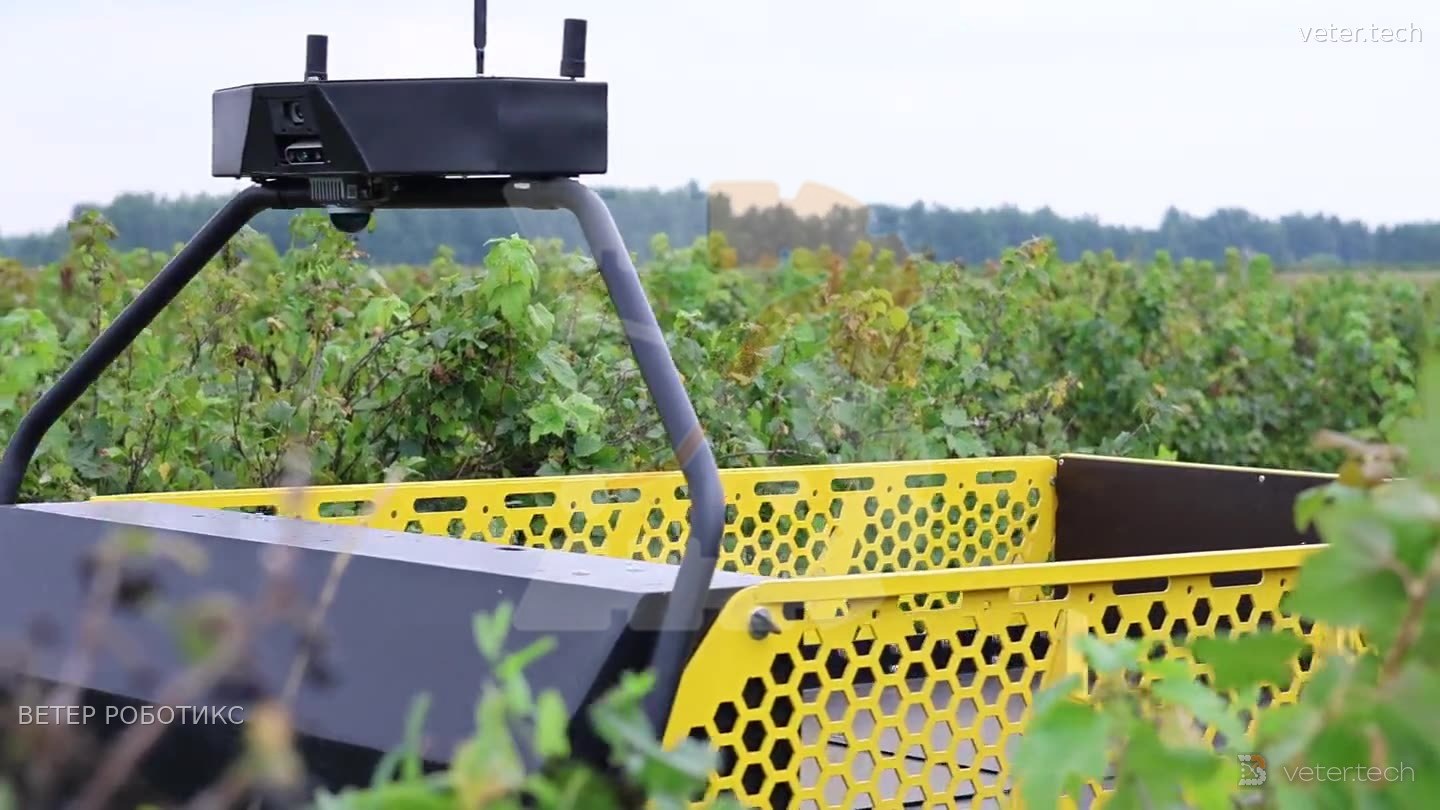
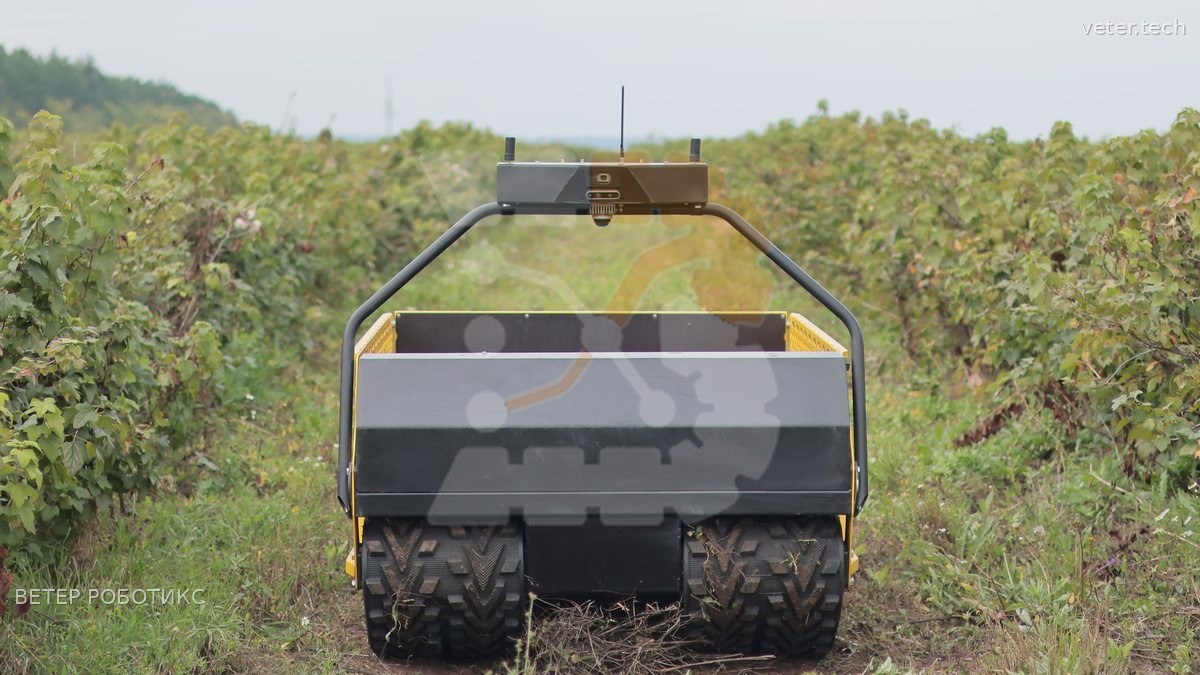
You would think a ground robot's worst enemies are stairs, mud and a dead battery. In practice, what stops an inspection machine at an industrial site most often is an ordinary closed door. That story and the rest of the week's news - in our roundup of the ground robotics industry. According to The Robot Report, ANYbotics, together with dormakaba and LEGIC, has taught the four-legged ANYmal robot to pass through doors that open only with an electronic access badge. Doors like these stand at power plants, in chemical plants and at mines - you don't get in without a badge. Now the robot gets access like an employee: the door opens for it under the same rules and with the same entry in the log, and the building needs no modifications. The solution was tested at an operating facility, and it can now be added to any ANYmal machine already in service. The point is simple: an equipment inspection round only counts if the machine reaches every unit, and a closed door was the final barrier. The second story comes from the labs. Tech Xplore Robotics writes that engineers at UCLA and the University of Michigan have built an experimental frog-like robot on elastic rods that bend and twist. Across six different types of terrain, this design proved faster than traditional rigid legs. Farm use is still a long way off - this is locomotion research. But the direction is intriguing: softness instead of rigidity could come in handy where rigid legs slip, for example on loose, uneven ground. The week's third topic is reliability. The Robot Report is announcing a panel discussion by engineers from WiBotic, Burro and Nextpower at an industry conference: they will dig into why outdoor robots break down. The causes are familiar to anyone who runs equipment: temperature swings, water, dust-clogged connectors, vibration. A machine that drives beautifully around a lab fails in completely different ways outdoors. And fourth - tools for developers. On the ROS Discourse forum, where robot builders talk shop, Mission Canvas was presented: a program in which a machine's individual skills are assembled into a coherent route - where to go, what to do there and where to head next. It's a tool for the people who configure robots; a machine's owner doesn't need it directly, but it's tools like these that will one day let a robot do all this on its own. Where does VETER ROBOTICS fit in? The VETER TEGU tracked platform hauls the raspberry harvest along the rows of a berry farm - the same hauling along a known route that foreign field machines do. And the VETER SCINK tracked platform with a snow blower attachment works as a snow removal robot: it clears snow on roads and walkways.

What drains a robot's battery in an orchard: turns at the end of the row

What drains a robot's battery in an orchard: turns at the end of the row

You would think the faster a machine goes, the more energy it burns per kilometer. A test on the VETER TEGU tracked platform showed that's almost true, but the difference is smaller than you'd expect: at a steady pace from 1.4 to 3.3 km/h, consumption per kilometer rises with speed by about 10%, and above 4 km/h we have no data yet - that measurement is still to come. A turn at the end of the row, on the other hand, costs about four times as much as driving straight. The tracked chassis carries an onboard data logger - a device that automatically records current and speed while the machine works. It logged 4 days of a ground robot working in an orchard: about 3.6 hours of driving, unloaded, on gentle orchard slopes of up to 5 degrees. Only the motor current went into the measurement. The onboard electronics aren't included, even though they run all the time, even when parked, and draw an estimated 39 W - roughly like a small light bulb. So the real battery drain is slightly higher than the figures below - by that same light bulb. Most of the work happened driving straight at about 2.3 km/h - slower than a person's normal walking pace. Two things are worth distinguishing here: power is how much energy the motors are pulling right now, while consumption is how much will be spent per kilometer of travel. Driving straight at about 2.3 km/h, consumption is 1.9 Ah per kilometer. At a steady pace on level ground, consumption per kilometer rises with speed: 1.8 Ah per kilometer at 1.4 km/h and 2.0 Ah per kilometer at 3.3 km/h - a difference of about 10%. Above 4 km/h we have almost no data, so there are no conclusions yet - that measurement is still to come. What this means for a farm: the robot's speed determines how fast the battery drains over time, while consumption per kilometer of row barely changes. Covering the same row at 3.3 km/h instead of 1.4 km/h means spending about 10% more per kilometer, but in noticeably less time. A turn is a different story. The machine turns slowly, at about 1.6 km/h, but the motors pull noticeably more than they do driving straight. If you convert a turn into a kilometer of that kind of movement, you get 7.8 Ah per kilometer at about 1.6 km/h - roughly four times a kilometer of straight driving. The conclusion VETER ROBOTICS engineers give orchard owners is simple: the longer the rows and the fewer turns on the route, the farther the machine will go on a single charge. One nice detail to finish with: when the machine stands still, motor current is zero and measured power is 0 W - only the electronics are running, with their calculated 39 W. A pause in the work costs almost nothing. And over all 4 days the motors never heated above 41 degrees - warmer than a human hand, but a long way from overheating.

CONTACT

Tell us what you need done

Describe the job and the conditions, and we'll tell you whether a standard machine will handle it or it calls for custom work.

PHONE

+7 910 048-27-03

Voice calls only.
SEND AN INQUIRY

@veter_contact_bot

Sent via Telegram. We'll reply in the same chat.
EMAIL

info@veter.tech

For correspondence and documents.
FOLLOW US

Telegram MAX

Development news and field trials (in Russian).
REGIONAL DEALERS

Where to buy